
Introduction
Bifold doors are a practical and attractive feature in many modern homes and commercial properties. They can create a wide opening, bring more natural light into a room, and provide easy access between indoor and outdoor areas. However, because bifold doors contain several moving components, they can develop problems with regular use. Rollers, hinges, tracks, handles, locks, and alignment points can all experience wear over time, especially when the doors are opened and closed frequently.
A bifold door that is not working properly can quickly become frustrating. You may notice that the panels are becoming harder to move, the door makes unusual sounds, or the panels no longer fold together correctly. Some problems may appear minor at first but can become more serious if the door continues to be used without attention. Understanding the most common problems can help you identify when your bifold door needs maintenance or professional repair.
At Bifold Door Repair Leeds, we understand how important it is for bifold doors to operate smoothly and reliably. Whether you are dealing with a sticking door, damaged rollers, loose hinges, or a faulty locking mechanism, identifying the underlying cause is the first step towards finding the right solution. Here are some of the most common bifold door problems and what you can do about them.
1. Bifold Doors Becoming Difficult to Open or Close
One of the most common signs of a bifold door problem is increased resistance when opening or closing the panels. A door that previously moved smoothly may suddenly feel heavy, stiff, or difficult to operate. In some cases, you may need to use more force than usual to move the panels along the track. This should not be ignored because forcing the door can put additional pressure on the rollers, hinges, and other components.
There are several possible reasons for this problem. Dirt and debris can build up inside the track and interfere with the rollers, while worn rollers may no longer move as freely as they should. The door may also have become misaligned over time. A professional inspection can help determine the exact cause and prevent unnecessary replacement of components that are still in good condition.
2. Worn or Damaged Bifold Door Rollers
Rollers play an important role in the operation of bifold doors because they support the panels and allow them to move along the track. With regular use, rollers can gradually wear down, become damaged, or stop moving smoothly. Signs of worn rollers may include dragging, uneven movement, grinding noises, or a door that feels much heavier than normal.
If the rollers are damaged beyond repair, Bifold Door Roller Replacement may be required. Replacing worn rollers can make a significant difference to the movement of the door and can also reduce unnecessary strain on other components. It is important to use suitable replacement parts and ensure that the new rollers are correctly fitted and adjusted for the specific door system.
3. Loose, Damaged, or Faulty Hinges
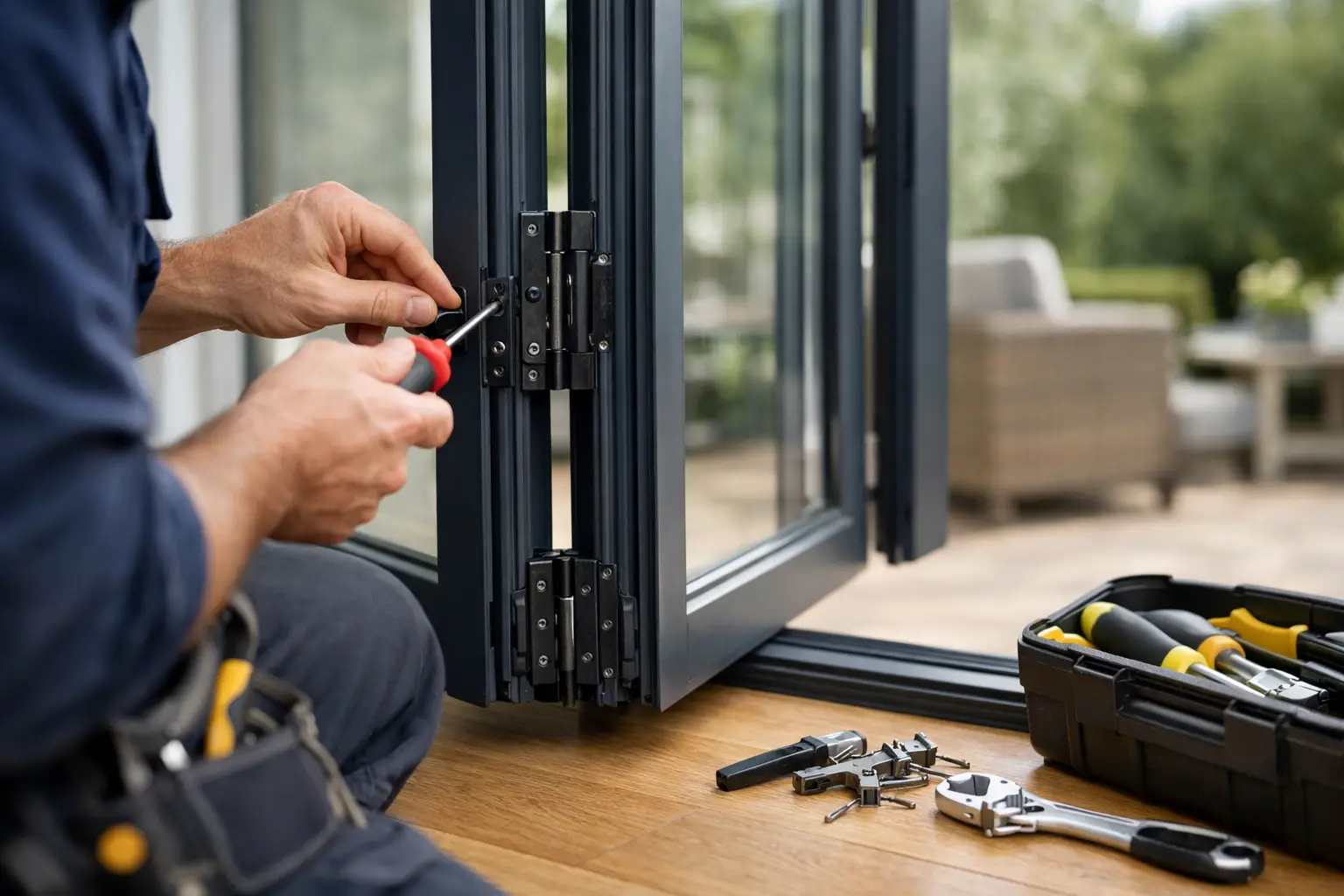
Hinges allow bifold door panels to fold and move together correctly. When a hinge becomes loose, damaged, or excessively worn, the panels may no longer fold smoothly. You might notice that one section appears uneven or that the door does not sit correctly when fully closed. In some cases, damaged hinges can also cause the panels to rub against one another or the surrounding frame.
Bifold Door Hinge Repair can help address problems caused by loose or damaged hinges. Depending on the condition of the hardware, the solution may involve tightening, adjusting, repairing, or replacing the affected component. Addressing hinge problems early can help prevent additional strain on the rollers and other parts of the bifold door system.
4. Bifold Door Alignment Problems
Correct alignment is essential for bifold doors to operate properly. When the panels become misaligned, the door may not close evenly, gaps can appear between panels, or the panels may rub against the frame. Misalignment can happen for several reasons, including regular use, component wear, changes in the door structure, or problems with the rollers and hinges.
An incorrectly aligned door can become increasingly difficult to operate if the underlying issue is not addressed. Simply pushing or pulling the panels into position may provide a temporary improvement but will not necessarily solve the cause of the problem. Proper inspection and adjustment can help ensure that the panels, rollers, hinges, and track are working together correctly.
5. Faulty Handles, Locks, and Security Problems
Handles and locking mechanisms are important not only for convenience but also for the security of your property. A loose handle, damaged lock, or mechanism that does not engage correctly can make the door difficult to secure. You may notice that the handle feels loose, the key does not operate smoothly, or the lock fails to engage when the door is closed.
These problems should be addressed promptly rather than forcing the handle or lock. Excessive force can cause further damage to the hardware and potentially affect the surrounding door components. Depending on the issue, the handle or locking mechanism may be adjusted, repaired, or replaced to restore reliable operation and security.
Conclusion
Bifold door problems can develop gradually, and the early warning signs are not always obvious. A door that feels slightly heavier, makes an unusual noise, or does not close as neatly as it once did may already have a developing issue. Addressing these signs early can help prevent additional wear and reduce the possibility of more extensive repairs in the future.
Whether the problem involves rollers, hinges, alignment, tracks, handles, or locks, the right repair depends on identifying the actual cause. At Bifold Door Repair Leeds, we focus on practical solutions designed to restore smooth movement and dependable performance. If your bifold doors are becoming difficult to operate or are showing signs of damage, professional attention can help get them working properly again.
Add a Comment